Interval Training
Run hard. Recover. Go again. Just as you start to feel human.
Intervals are one of the simplest sessions to understand — and one of the easiest to get wrong.
At their core, they’re just this:
run hard, take a break, repeat
But how hard you run, how long you go for, and how much recovery you give yourself makes all the difference between a session that works… and one that just leaves you exhausted.
What They Actually Are
Interval training is about alternating between periods of harder running and periods of recovery.
The key word there is alternating.
You’re not trying to hold a steady effort like a tempo run. You’re deliberately pushing above that level, knowing you’ve got a break coming.
Typical interval sessions might look like:
- 5 × 3 minutes hard / 2 minutes easy
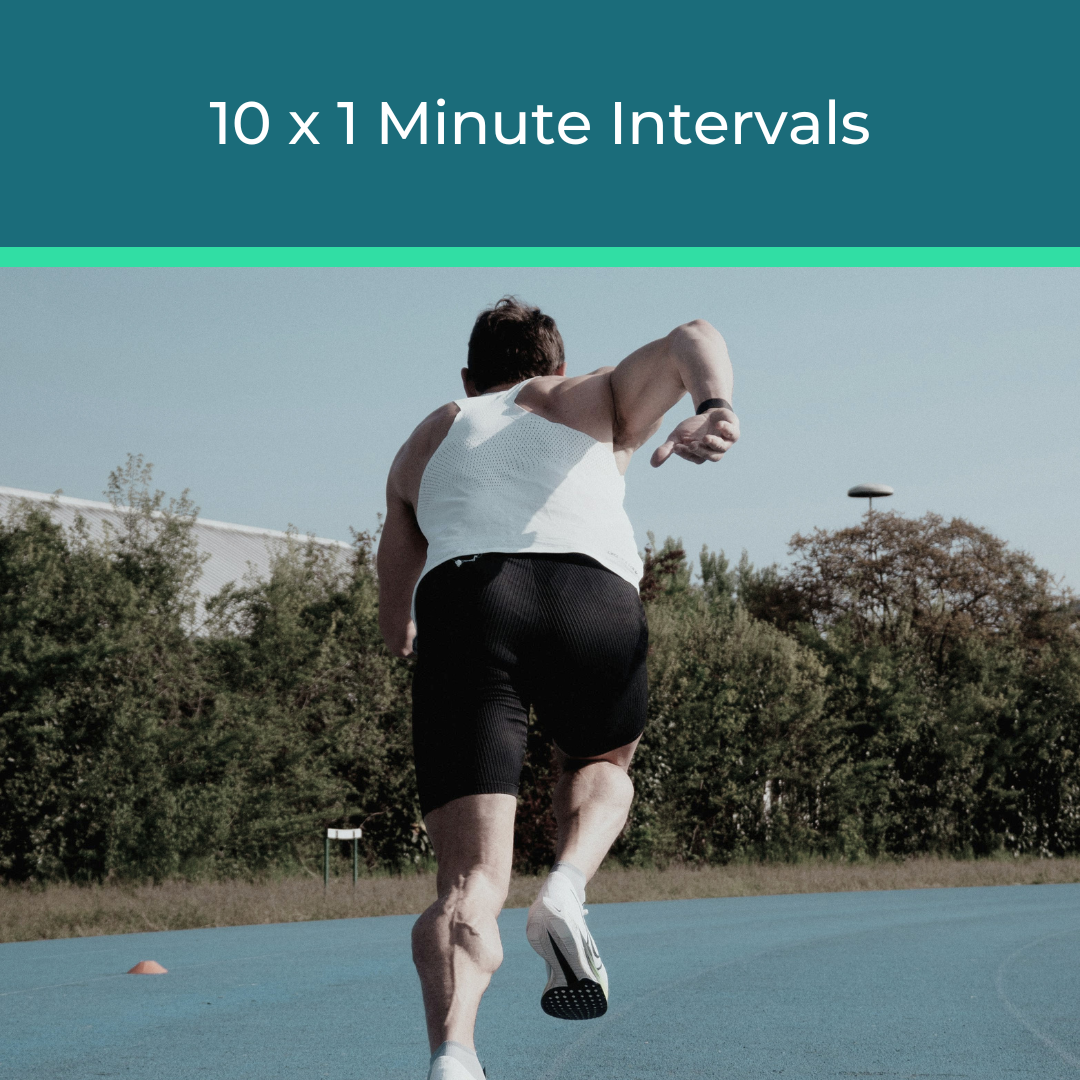
- 8 × 1 minute hard / 1 minute easy
- 4 × 5 minutes hard / 3 minutes easy
There’s no single “right” version.
The structure just depends on what you’re trying to get out of it.
What They Feel Like
The first rep always feels manageable.
You settle in, hit the effort, and think:
this is alright…
By the third or fourth, that changes.
Your breathing is heavy, your legs are starting to feel it, and you’re very aware that you’ve still got more to do.
Then the recovery comes.
You ease off, catch your breath, and just as you start to feel like you’re getting back on top of things…
It’s time to go again.
That’s the rhythm of intervals.
You’re constantly moving between discomfort and relief.
Why I Use Them
Intervals are one of the most efficient ways to improve your overall running fitness.
They push your body harder than steady running ever will, but in a controlled way that you can repeat.
Over time, they help you:
- run faster
- recover quicker
- handle changes in pace
- deal with discomfort
For trail and ultra running, that last one is particularly useful.
Because races rarely feel steady.
There are climbs, descents, technical sections, moments where you need to push — and intervals prepare you for that variation.
How to Do Them (Simply)
Start with a proper warm-up:
- 10–15 minutes easy running
- a few short strides if you like
Then into the session.
A Solid Starting Session
- 6 × 2 minutes hard
- 2 minutes easy jog or walk between reps
That’s enough to get the benefit without overcomplicating things.
Effort Level
This is where it matters.
“Hard” doesn’t mean sprinting flat out.
It means:
- controlled but uncomfortable
- harder than tempo
- sustainable across all reps
You should be working, but still in control.
If the first rep is your fastest and everything falls apart after that:
you’ve gone too hard.
What It Should Feel Like (Reality Check)
A good interval session feels:
- challenging, but repeatable
- tough in the middle reps
- controlled, not chaotic
You should finish feeling like you’ve worked hard — but not completely emptied the tank.
There’s a difference.
Backed by Science (Kept Simple)
Interval training is one of the most studied forms of endurance training — and for good reason.
Key findings:
- High-intensity intervals significantly improve VO2 max (your ability to use oxygen), which is a key driver of endurance performance
→ (Buchheit & Laursen, 2013, Sports Medicine) - Interval training improves both aerobic and anaerobic systems, making you more efficient across a range of efforts
→ (Laursen & Jenkins, 2002, Sports Medicine) - Compared to steady running alone, intervals can lead to greater improvements in speed, endurance, and time to exhaustion
→ (Seiler, 2010, Scandinavian Journal of Medicine & Science in Sports)
In plain English:
Intervals help you:
- run faster
- recover quicker
- cope better when things get hard
When to Use Them
Intervals work well:
- once a week
- alongside tempo or hill sessions (not all in the same week early on)
- when you want to build speed and fitness
They’re especially useful when:
- you feel like you’ve plateaued
- you want to add intensity to your training
- you need a session that breaks things up mentally
Common Mistakes
Going too hard, too early
This is the classic one.
If you destroy yourself in the first two reps, the rest of the session loses its value.
Not recovering properly
The recovery is part of the session.
If you rush it, you’re just turning it into a badly paced tempo run.
Turning it into a race
Intervals aren’t about proving anything.
They’re about building something.
Final Thought
Intervals aren’t always enjoyable.
They require a bit of discipline, a bit of honesty, and a willingness to sit with discomfort — repeatedly.
But they work.
They make you fitter, more resilient, and better prepared for the unpredictable nature of real-world running.
And once you get used to that rhythm — hard, recover, go again — you start to realise:
You can handle more than you thought.
📚 References
- Buchheit, M. & Laursen, P.B. (2013). High-intensity interval training: physiological adaptations and practical applications. Sports Medicine.
- Laursen, P.B. & Jenkins, D.G. (2002). The scientific basis for high-intensity interval training. Sports Medicine.
- Seiler, S. (2010). What is best practice for training intensity distribution in endurance athletes? Scandinavian Journal of Medicine & Science in Sports.