
Event Review - UltraX Spring Trails 2026
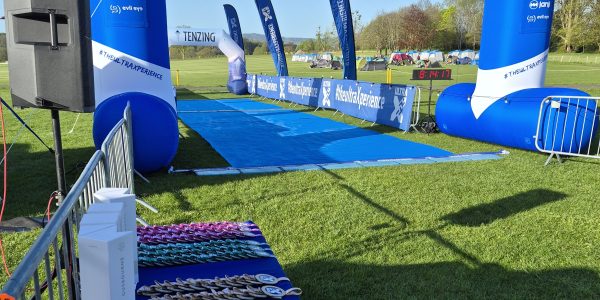
Ultra X Spring Trails — From the Other Side
This time, I wasn’t running.
No nerves on the start line, no checking kit for the tenth time, no quiet wondering whether I’d taken on a bit more than I should have. Instead, I was stood in the event village at the Cowdray Estate, watching the whole thing come together from the other side.
And it’s a very different experience.
The first thing that strikes you is the scale of it. Five distances, stretching from 12km all the way up to 110km, with the longest races starting at five in the morning and registration opening from four. Proper early starts for those involved, although it quickly becomes clear that at that time of day, the focus isn’t on coffee stands or event village chatter. It’s on getting people out onto the course, safely and smoothly, without fuss.
By the time things really get going, the setting does most of the talking. A brand-new start and finish arch sits proudly above the grounds, with the old castle down in the valley below giving the whole place a slightly surreal backdrop. It looks impressive, but what you notice more, once you stop looking at the view, is everything happening around it.
There’s movement everywhere.
Volunteers are constantly on the go, carrying, lifting, shifting things from one place to another. One minute it’s tables being positioned, the next it’s boxes being unpacked, fences being adjusted, signs being hammered into the ground. Nobody seems to stand still for long. As soon as one job is done, they’re onto the next without needing to be asked.
And somehow, it all feels organised.
At the centre of it is the Race Director, permanently attached to a walkie talkie, calmly orchestrating everything. It’s not just the big decisions either. It’s everything. Table positions, route markers out in the countryside, where things need to be, when they need to be there. It’s a massive operation, and yet it never feels frantic. There’s a steady control to it all that’s quite hard to explain unless you see it.
At one point, a local landowner arrives, not particularly happy that the route crosses his land. It’s clearly a genuine mistake, the kind of thing that could easily spiral into something awkward. Instead, it’s handled quickly, calmly, and professionally. Within a few minutes, the situation is resolved, and he leaves not just satisfied, but genuinely impressed. It says a lot about how the whole thing is being run.
Around the edges of all this, the event village starts to take shape. Coffee, food, music, a DJ keeping things ticking over, runners and supporters drifting in and out throughout the day. There’s a relaxed, friendly atmosphere that feels very “trail” — people chatting, asking questions, taking an interest in what’s going on. From my side of the stall, there’s a steady stream of conversations. Curious runners, supporters looking for something to do while they wait, people just soaking up the environment.
It’s easy to focus on that part of it, because that’s what most people see.
What you don’t see, unless you’re paying attention, is everything happening behind it.
Boxes are being prepared for checkpoints, carefully organised with food, water, medical supplies, all labelled and laid out with a level of detail that leaves nothing to chance. Water bowzers are positioned, bins are placed where they’re needed, fencing goes up, flags appear, barriers are moved and adjusted. It’s constant, methodical work that most runners will never think about, but would definitely notice if it wasn’t done properly.
That’s the strange thing about it.
It’s a massive undertaking, all designed to go unnoticed.
When it works, nobody really thinks about it. They just run their race, collect their medal, and head home. But standing there, watching it come together piece by piece, you realise how much effort sits behind that simplicity.
And how many people it takes.
There must have been well over fifty volunteers around the village alone, and that’s before you even consider those out on the course. Every one of them focused, committed, and ready to help wherever needed. There’s a real sense that everyone understands what they’re part of, and is willing to do whatever it takes to make it work.
You can’t help but think how different it would feel if the weather turned. If all of this was happening in the rain, under pressure, with things not quite going to plan. And yet, you suspect it would still come together in much the same way.
Because that’s what good organisation looks like.
By the time early check-in opens in the afternoon, everything is ready. People start arriving ahead of schedule, as they always do, but it doesn’t cause any issues. The process runs smoothly, quietly, without drama. Another part of the day that, from the outside, looks simple.
But now you know it isn’t.
Watching an event like this from the other side doesn’t change your view of the race itself. If anything, it deepens it. You still see the challenge, the effort, the experience of being out on the course.
You just also see everything that makes it possible.
And next time you stand on that start line, you’ll know exactly how much has gone into getting you there.