
Lunge
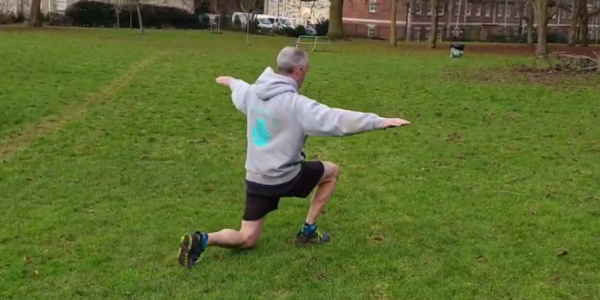
Why it matters for trail runners
The lunge is one of the best exercises a trail runner can do because trail running is essentially a series of single-leg movements. Every step, climb, descent and obstacle requires strength, balance and control on one leg at a time.
Lunges build strength through the quads, glutes, hamstrings and hips while also challenging balance and coordination. They help prepare the body for uneven terrain, technical trails and the constant changes in gradient that trail runners face.
Because lunges work each leg independently, they can also help identify and reduce strength imbalances that may contribute to injury.
Where this helped me
I really noticed the value of lunges during steep climbs and technical descents where one leg often has to do more work than the other. They also helped when stepping up onto rocks, tree roots and uneven ground where balance and stability become just as important as strength.
Key benefits
- Builds single-leg strength
- Improves balance and coordination
- Develops hip stability
- Helps reduce strength imbalances
- Improves climbing and descending control
Common mistakes
- Front knee collapsing inward
- Taking too short a step
- Leaning excessively forwards
- Pushing off the back foot instead of the front leg
- Rushing the movement and losing balance
Coaching tip
Think "drop straight down" rather than lunging forwards. Stay tall through the torso and keep the movement controlled.
Lunge Variations
Reverse Lunge
Often easier on the knees than a forward lunge while still building excellent single-leg strength and stability for trail running.
Walking Lunge
Develops balance, coordination and movement control while building strength under fatigue.
Lunge with Knee Drive
Adds balance and hip strength while mimicking the action of driving up steep climbs.
Jumping Lunge
Develops explosive power and leg turnover, useful for short steep climbs and rapid changes of pace.
Curtsy Lunge
Targets the glutes and hip stabilisers, helping improve lateral control on uneven terrain.
Lateral Lunge
Strengthens movement in the side-to-side plane, improving stability when traversing slopes and technical ground.
Deficit Lunge
Increases range of motion and mobility while developing strength through a deeper movement pattern.
Pulse Lunge
Builds muscular endurance in the quads and glutes, ideal preparation for long climbs and race fatigue.
Weighted Lunge
Adds additional strength demands and helps develop greater power for climbing and carrying momentum uphill.
Clock Lunge
Challenges balance, coordination and ankle stability by moving in multiple directions from a single standing position.
Split Squat
A stationary lunge variation that allows greater focus on strength development and control without the balance demands of stepping.
Bulgarian Split Squat
One of the best exercises for building single-leg strength, stability and resilience for trail running performance.