
Glute Bridge
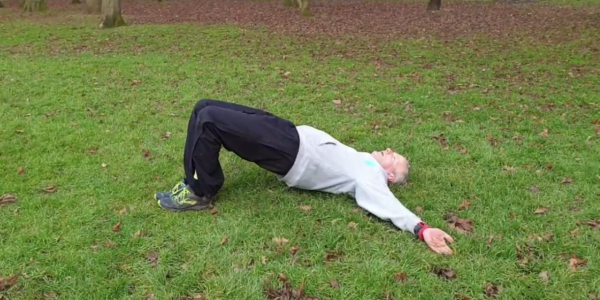
Glute Bridge
Why it matters for trail runners
The glute bridge is one of the best exercises for activating and strengthening the glutes, which are among the most important muscles for trail runners. Strong glutes help drive you uphill, stabilise the pelvis and maintain efficient running mechanics over long distances.
Many runners become overly quad-dominant, especially if they spend a lot of time sitting. Glute bridges help restore balance by teaching the body to properly engage the posterior chain.
For trail runners, this means better power on climbs, improved stability and reduced strain on the lower back and knees.
Where this helped me
I noticed the biggest difference on steep climbs and during long races where maintaining good posture became more difficult. Stronger glutes helped me stay efficient late into runs and reduced the feeling of my legs "switching off" during long ascents.
Key benefits
- Strengthens the glutes
- Improves hip stability
- Supports climbing performance
- Reduces lower back stress
- Improves running posture
- Enhances force production
Common mistakes
- Overarching the lower back
- Pushing through the toes instead of the heels
- Rushing the movement
- Not fully engaging the glutes
- Allowing the knees to collapse inward
Coaching tip
At the top of each repetition, squeeze the glutes hard and hold briefly before lowering under control.
Glute Bridge Variations
Single Leg Glute Bridge
Improves single-leg stability and strength.
Weighted Glute Bridge
Increases strength development.
Marching Glute Bridge
Challenges core stability and pelvic control.
Elevated Glute Bridge
Increases range of motion.
Banded Glute Bridge
Adds hip stability and glute activation.
Isometric Glute Bridge Hold
Builds endurance and postural strength.