
Bodyweight Squat
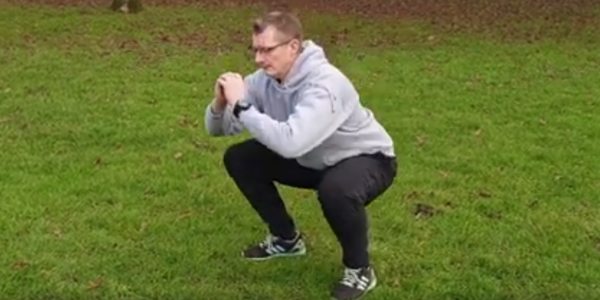
Bodyweight Squat
Why it matters for trail runners
The bodyweight squat is one of the most fundamental exercises a trail runner can perform. It develops strength, mobility, balance and movement control using nothing more than your own body weight.
While it may seem simple, the bodyweight squat lays the foundation for many of the movements used in trail running. Every climb, descent and technical section requires the ability to bend, stabilise and produce force through the hips, knees and ankles.
For newer runners, bodyweight squats help build basic strength and movement quality before progressing to loaded exercises. For experienced runners, they are an excellent tool for warm-ups, mobility work, recovery sessions and maintaining movement efficiency.
They also help improve ankle mobility, hip function and lower-body endurance, all of which contribute to better performance on the trails.
Where this helped me
Bodyweight squats became a regular part of my warm-up routine before races, hill sessions and strength workouts. They helped improve mobility through the hips and ankles while reinforcing good movement patterns.
I also found them incredibly useful during recovery periods or when returning from injury, allowing me to maintain leg strength and movement quality without excessive loading. On long trail adventures, they were a simple way to keep the legs active and mobile after hours of running.
Key benefits
- Builds foundational leg strength
- Improves hip and ankle mobility
- Enhances balance and coordination
- Reinforces good movement mechanics
- Develops muscular endurance
- Requires no equipment
- Excellent for warm-ups and recovery
Common mistakes
- Allowing the knees to collapse inward
- Rounding the lower back
- Letting the heels lift off the ground
- Not squatting to a comfortable depth
- Moving too quickly without control
Coaching tip
Focus on smooth, controlled movement and think about sitting your hips back and down while keeping your chest proud and your feet firmly planted on the ground.
Bodyweight Squat Variations
Air Squat
The classic bodyweight squat, ideal for building movement quality, mobility and endurance.
Tempo Squat
Uses a slower lowering phase to increase control, strength and time under tension.
Pause Squat
Adds a hold at the bottom position to improve stability, mobility and muscular endurance.
Box Squat
Helps develop confidence, consistency and proper squat mechanics.
Squat to Calf Raise
Combines lower-body strength with calf development and ankle stability.
Prisoner Squat
Places the hands behind the head to challenge posture and thoracic mobility.
Overhead Squat
Improves mobility, stability and full-body coordination.
Squat Reach
Adds an upper-body mobility component and makes an excellent warm-up exercise.
Pulse Squat
Builds muscular endurance and increases time under tension in the quads and glutes.
Squat Hold
Develops isometric strength and resilience, particularly useful for building endurance for long climbs and descents.
Squat to Single Leg Balance
Combines strength, balance and ankle stability, making it highly relevant for technical trail running and uneven terrain.