
What Life Was Really Like Before I Quit Drinking
Blackout.
That’s where this story probably needs to begin.
Not because it was the single worst thing that ever happened to me, but because it perfectly captured where years of drinking had quietly taken me.
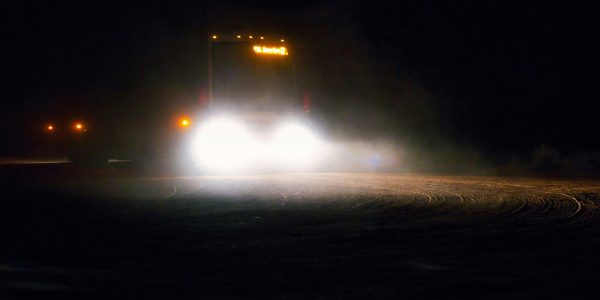
I came round somewhere around two in the morning, standing on the A34 near Solihull. Darkness all around me, fields either side, cars occasionally thundering past. I had absolutely no idea where I was, how I’d got there, or where I was supposed to be.
I remember patting myself down instinctively.
Wallet. Tick.
Phone. Tick.
Keys. Tick.
All there. Thank goodness for that!
Which somehow made the situation even more surreal because although everything important appeared to be physically present, mentally things were very, very wrong.
I should have been asleep in the bed-and-breakfast I’d booked for a work trip. Instead, I was stumbling along the middle of a dual carriageway trying to look purposeful enough that perhaps I’d magically arrive somewhere sensible.
At one point I even tried to flag cars down before slipping back into blackout again.
The following morning I woke in my B&B bed to someone asking how I’d like my eggs cooked.
To this day, I still don’t know exactly how I got back there.
What I do know is this:
It still wasn’t enough to make me stop drinking.
In fact, I was in the pub by lunchtime the following day trying to calm myself down and make the whole thing mentally disappear.
After all, I told myself, it was a one-off.
A freak event.
Lesson learned.
I’d simply be more careful in future.
That was the pattern for years.
Not some kind of dramatic collapse.
Not rock bottom every weekend, or even weekday by the end.
It was just a gradual accumulation of moments that, viewed honestly, painted a fairly worrying picture.
The strange thing about alcohol is how easy it is to normalise almost anything when everyone around you is doing roughly the same thing.
Pub culture was everywhere in my life:
after work drinks, sport, weekends, meals out, celebrations, holidays, stress relief, boredom relief. Just because.
Alcohol wasn’t something separate from life.
It was life.
And for a long time, I genuinely believed it helped me.
I thought it gave me confidence.
Helped me relax.
Made social situations easier.
Allowed me to switch off.
Looking back now, I can see that what it mostly did was narrow my life while convincing me it was expanding it.
One of the biggest misconceptions about problematic drinking is that people imagine you must permanently exist in chaos.
Often, you don’t.
You still go to work.
Pay bills.
Function.
Make jokes.
Meet deadlines.
Do the shopping.
Mow the lawn.
Which makes it incredibly easy to convince yourself everything is fine.
I became very good at being what people might call “functional”.
In reality, I was often exhausted.
Not simply physically, but mentally.
The planning.
The negotiation.
The promises.
The regret.
The recovery days.
The hangovers.
The anxiety.
The quiet calculations around alcohol that sat underneath almost everything.
And hovering over it all was what I later came to call the “Fuck It Fairy”.
That little voice that appears the moment you’re vulnerable.
The one that says:
“Go on.”
“One more won’t matter.”
“You’ve had a hard week.”
“You may as well now.”
“Start again Monday.”
The Fuck It Fairy was particularly dangerous once I’d already had a drink or two. I’d begin with perfectly sensible intentions, but once the edge had come off the hangover or stress, in she’d float.
“Oh fuck it…”
And off I’d go again.
A hockey match would become an all-day drinking session.
One pint after work would quietly become rather more.
A couple of beers at home would somehow evolve into polishing off another bottle of wine because, well, I’d already started it now.
It sounds absurd written down.
The problem is that when you live inside that cycle for years, it stops feeling absurd. It simply becomes normal life.
What I feared most wasn’t actually hangovers, embarrassment, or even the health side of things.
It was the idea of stopping.
Because by that stage alcohol felt woven into my identity.
How do you go to the pub and not drink?
How do you watch live music sober?
How do you socialise?
Relax?
Celebrate?
Cope with stress?
I genuinely couldn’t picture it.
I thought quitting drinking meant life becoming smaller, duller, emptier.
What I didn’t understand at the time was that the exact opposite was true.
Even then, running already existed in my life in small ways.
I’d started running while I was still drinking. Occasionally races, training runs, bits of structure amongst the chaos. But alcohol still sat heavily over everything. Running was there, but it hadn’t yet fully become part of who I was.
That would come later.
Because quitting drinking didn’t instantly transform my life overnight.
TrailKube didn’t suddenly appear the following year.
Neither did ultra running adventures in Nepal.
In fact, those things were still years away.
But quitting did quietly give me something incredibly important:
more.
More time.
More energy.
More money.
More consistency.
More confidence.
More opportunity.
and
More belief that perhaps life could become something bigger than simply surviving the week and rewarding myself by poisoning myself every weekend.
And eventually, running became the thing that brought all of that to life.
At the time though, standing on the A34 in the middle of the night, completely lost and emerging from blackout, I had absolutely no idea any of that was coming.